Understanding the Polyphagous Shot Hole Borer
The Polyphagous Shot Hole Borer (PSHB) — Euwallacea fornicatus sensu lato — is an invasive ambrosia beetle originally from Southeast Asia. Since its detection in South Africa (first identified in KwaZulu-Natal around 2017 and now established throughout the Western Cape), it has become one of the most serious tree health threats the country has faced.
The beetle bores into tree bark and introduces Fusarium fungal symbionts on which it feeds and breeds. These fungi cause a wilt disease that progressively kills the tree from the inside out. What makes PSHB particularly dangerous is its polyphagous nature — it can use over 300 tree species as hosts.
In Stellenbosch alone, thousands of heritage oak trees are at risk. The Cape Winelands, with its famous oak-lined streets and wine estate landscapes, faces an ecological and aesthetic crisis of significant scale.
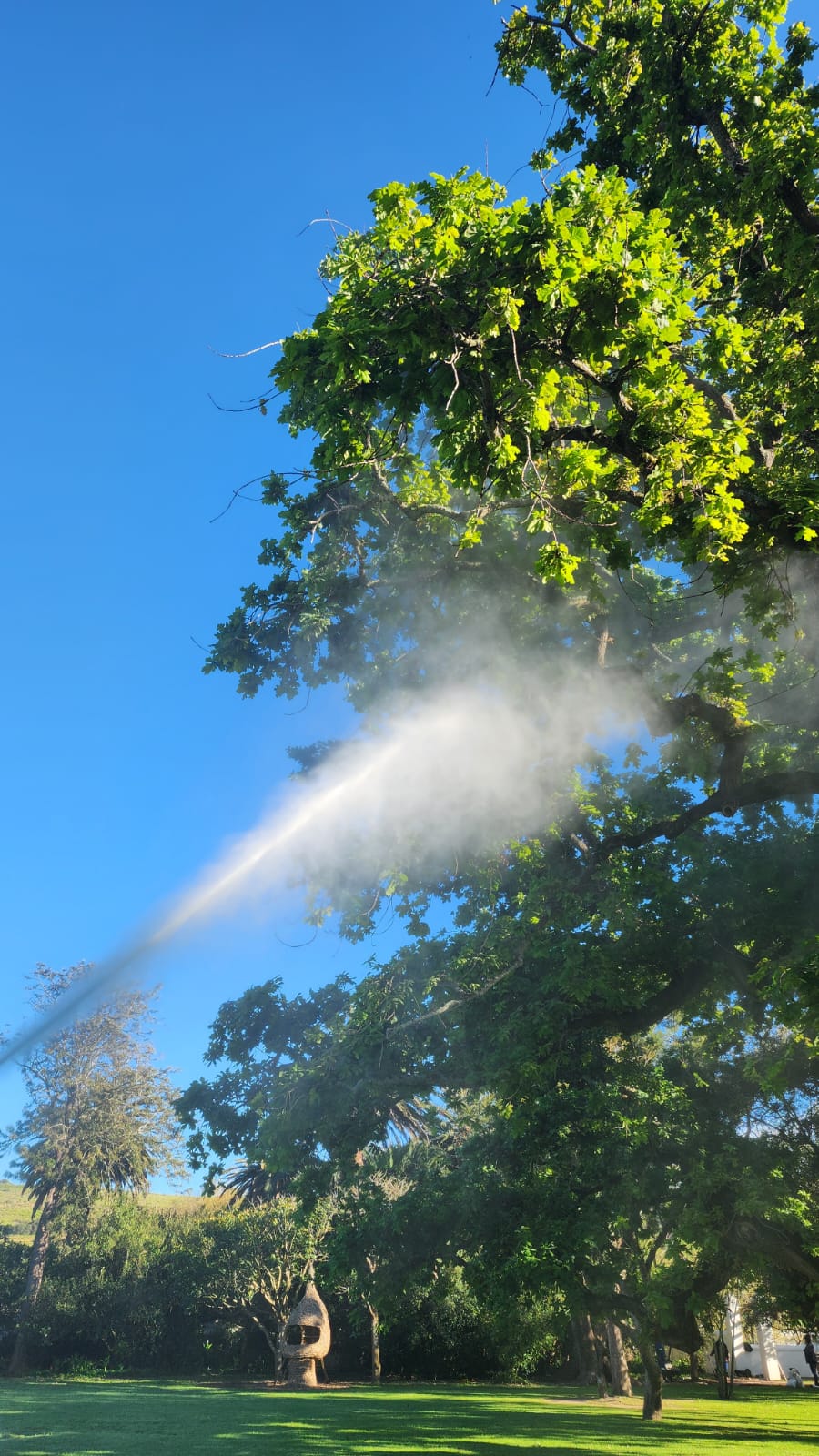
How to Identify a PSHB Infestation
Know what to look for. Early identification gives you the best management options.
Entry Holes
Small, perfectly circular bore holes of 1–2mm diameter in the trunk or major branches. May appear alone or in clusters.
Frass & Bore Dust
White powdery or granular frass (sawdust-like material) visible around entry holes or on the bark surface.
Staining & Wet Patches
Dark, wet or discoloured patches on the bark surface caused by sap oozing around beetle galleries.
Crown Dieback
Progressive wilting and dieback of individual branches or sections of the crown, which may appear to die suddenly.
Gallery Staining
Dark streaking or blue-black staining visible under the bark when cut — caused by Fusarium fungal growth in beetle galleries.
Beetle Presence
Tiny (1.5–2mm) dark brown beetles visible around entry holes. Females are slightly larger than males.
Comprehensive PSHB Management
A structured approach from identification through to long-term management.
PSHB Identification & Confirmation
Visual inspection and assessment of suspected PSHB symptoms. Confirmation of infestation status and identification of affected species. Advice on immediate action.
Tree-by-Tree Risk Assessment
Detailed assessment of each tree on your property to determine infection status, host classification, structural integrity, proximity risks and urgency of intervention.
Monitoring Programmes
Scheduled monitoring visits to track infestation spread, assess treatment effectiveness and update management plans. Particularly valuable for large estates.
Treatment Protocols
Where treatment is viable, RVZ applies systemic treatments, wound management and canopy reduction strategies to reduce beetle pressure and support tree resilience.
Biosecure Removal
When removal is necessary, RVZ follows strict biosecurity protocols to prevent spread via wood material. All infested material is handled and disposed of correctly.
Long-Term Management Plans
Comprehensive written management plans covering replanting strategies (using PSHB-resistant species), ongoing monitoring, estate-wide biosecurity and risk mitigation.
Common PSHB Reproductive Host Trees in South Africa
These tree species are confirmed reproductive hosts in South Africa — meaning PSHB can breed within them and cause the most severe damage.
| Common Name | Scientific Name | Risk Status |
|---|---|---|
| English Oak | Quercus robur | Reproductive host — High risk |
| Box Elder / Ash-leaf Maple | Acer negundo | Reproductive host — High risk |
| London Plane | Platanus × acerifolia | Reproductive host — High risk |
| Weeping Willow | Salix babylonica | Reproductive host — High risk |
| Camphor Tree | Cinnamomum camphora | Reproductive host — High risk |
| Chinese Hackberry | Celtis sinensis | Reproductive host — High risk |
| Liquid Amber | Liquidambar styraciflua | Reproductive host — Moderate risk |
| Sycamore Maple | Acer pseudoplatanus | Reproductive host — Moderate risk |
Note: Over 300 tree species are known hosts. This table covers the most commonly affected species in the Western Cape. Contact RVZ for a full assessment of your specific tree species.
Is Your Property at Risk?
Wine Estates & Farms
Oaks and ornamental trees on wine estates are among the highest-risk properties in the Western Cape.
Residential Estates
Security estates and residential properties with mature oaks, planes or willows are highly vulnerable.
Municipalities
Public realm trees in Stellenbosch, Somerset West and Paarl require urgent PSHB assessment and management.
Large Private Gardens
Properties with established mature trees need a PSHB risk audit and management strategy in place.
PSHB Frequently Asked Questions
The Polyphagous Shot Hole Borer (PSHB), scientifically known as Euwallacea fornicatus sensu lato, is an invasive ambrosia beetle native to Southeast Asia. It bores into tree bark and introduces Fusarium fungal symbionts that cause a fatal wilt disease. It was first detected in South Africa around 2017 and has spread rapidly through the Western Cape, affecting over 300 tree species.
Reproductive host trees include English oaks (Quercus robur), box elder (Acer negundo), London plane (Platanus × acerifolia), weeping willow (Salix babylonica), Cape willowherb and several Acacia species. Stellenbosch's famous oak-lined streets and wine estate trees are particularly at risk.
Symptoms include small circular entry holes (1–2mm) in bark, white powdery frass (bore dust) around entry points, dark staining or wet patches on bark (galleries), wilting canopy sections and branch dieback. Some infections cause distinctive black streaking under the bark. Contact RVZ immediately for a professional assessment if you notice these signs.
Treatment effectiveness depends on severity and species. Early-stage infestations in non-reproductive hosts can sometimes be managed. In reproductive hosts with established Fusarium colonies, removal is often necessary to prevent spread. RVZ assesses each tree individually to determine the best course of action.
A PSHB management plan is a documented strategy covering: tree inventory and risk classification, treatment protocols, monitoring schedules, replanting recommendations with resistant species, and biosecurity measures. RVZ develops bespoke plans for wine estates, residential estates, commercial properties and municipalities.
Yes. PSHB spreads via adult beetles flying to new hosts, and through movement of infested wood and chippings. It is essential that all wood from suspected PSHB trees is handled under strict biosecurity protocols — which RVZ strictly follows. Never move wood from a suspected PSHB tree without professional guidance.